Travel tips
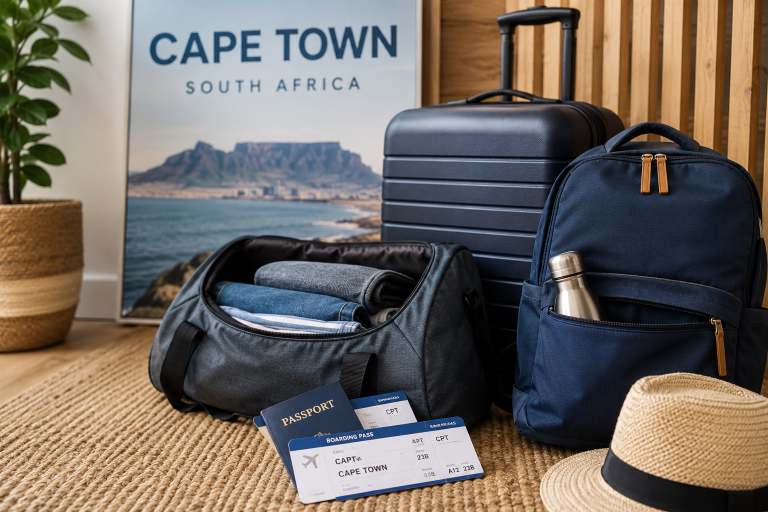
General traveller Information
Currency
The official currency of South Africa is the Rand, represented by the symbol R and the currency code ZAR. Credit cards are widely accepted but having some cash on hand is recommended. Cash can be withdrawn from ATMs but a beuro de change is available at Cape Town International Airport and at the V&A Waterfront.
Electricity
South Africa uses a standard electricity supply of 230V at 50Hz. For most devices, a voltage converter is not needed, but you will need a travel adapter for a Type M (large 3-round-prong) or Type C (2-round-prong) plug.
Consulate offices
See the list of Consulates in South Africa.
Health and Safety
Safety in Cape Town
Cape Town is a welcoming and popular destination for visitors, and most trips are trouble-free. As with any major city, it is important to remain aware of your surroundings and take sensible precautions, particularly in busy tourist areas and after dark. Petty crime, including pickpocketing, bag-snatching and theft from vehicles, can occur, so visitors should avoid displaying valuables, keep belongings secure and remain vigilant in crowded areas such as transport hubs, markets and the city centre.
When exploring on foot, especially in quieter areas or natural spaces, it is best to stay on well-used routes, avoid walking alone after dark and keep within sight of other visitors. Popular hiking areas, including parts of Table Mountain National Park, are generally safe when visitors follow marked trails, travel in groups, and allow enough time to complete walks before sunset. Visitors should be mindful when using mobile phones in busy public areas, as openly displaying valuable items can attract unwanted attention. It is advisable to, where possible, use phones discreetly, particularly in crowded areas or while walking through unfamiliar neighbourhoods. The V&A Waterfront, Camps Bay and Green Point are generally safe to walk around at night over short distances but avoid walking alone.
Visitors should also take care when driving: keep doors locked and windows up, avoid leaving valuables visible in vehicles, and always check that cars are securely locked before walking away. As in many cities, opportunistic theft can occur at parking areas and traffic lights. Some neighbourhoods are best avoided unless visiting with local guidance or as part of an organised tour. When in doubt, ask any member of the local organising committee or anyone from the local area for advice.
Emergency numbers
Ambulance: 10177
Fire service: 107 / +27 21 4807700
Police: 10111 or +27 21 4678000
Tourist Police: +27 21 4182852/4182853
All emergencies: 107
Explore
As the conference approaches, we will continue to add information and recommendations to this section to help you make the most of your time in Cape Town, whether you are planning to explore the city before the conference or extend your stay afterwards. We hope these resources will help you discover the many highlights that Cape Town and the surrounding areas have to offer. If you have any questions or would like advice on planning your visit, please don’t hesitate to get in touch with us!
Visa and other requirements for traveling to South Africa
Visa requirements
It's essential to verify whether you need a visa to enter South Africa, as visa requirements can vary depending on your nationality. We encourage all international travelers to check the visa regulations for their country of origin as early as possible to avoid last-minute complications. If you require a visa, you may need an invitation letter or a notification of abstract acceptance to support your application.
To learn more about visa requirements and how to apply, visit the official South Africa visa requirements website. For additional assistance with invitation letters, feel free to contact our team through the conference's official email.
Customs online traveller declaration
From 1st July 2026, the South African Revenue Service (SARS) requires that all travellers entering or leaving South Africa must submit a traveller declaration online before they travel, unless they qualify for one of the limited paper-based exceptions. The declaration forms part of the Customs process and helps travellers meet their legal obligation to declare goods, currency, bearer negotiable instruments (traveller’s cheques, bearer cheques, money orders, and bearer bonds) and other relevant items in their possession. Make sure to fill out the SARS form 24h before departure to South Africa.
Yellow Fever
South Africa requires a valid yellow fever certificate from all citizens and non-citizens over one year of age: travelling from a yellow fever risk country; or having been in transit through a yellow fever risk country.
Check the list of yellow fever risk countries
If you have travelled to any of these countries in the last 12 months please carry your yellow fever certificate with you when boarding your flight to South Africa and passing through passport control.
Malaria
While Malaria occurs in the north east of South Africa, the Western Cape is malaria free. If you intend to visit other parts of the country, be sure to check if you need to take any precautions.